Sentieon DNAscope vs. GATK: Best Variant Calling Alternatives for…
Key Takeaways
- GATK remains a trusted standard, but at scale it exposes efficiency limits: As sequencing volumes grow, traditional GATK-based variant calling pipelines can lead to longer runtimes, higher compute costs, and operational bottlenecks, prompting labs to evaluate more scalable alternatives without compromising analytical confidence.
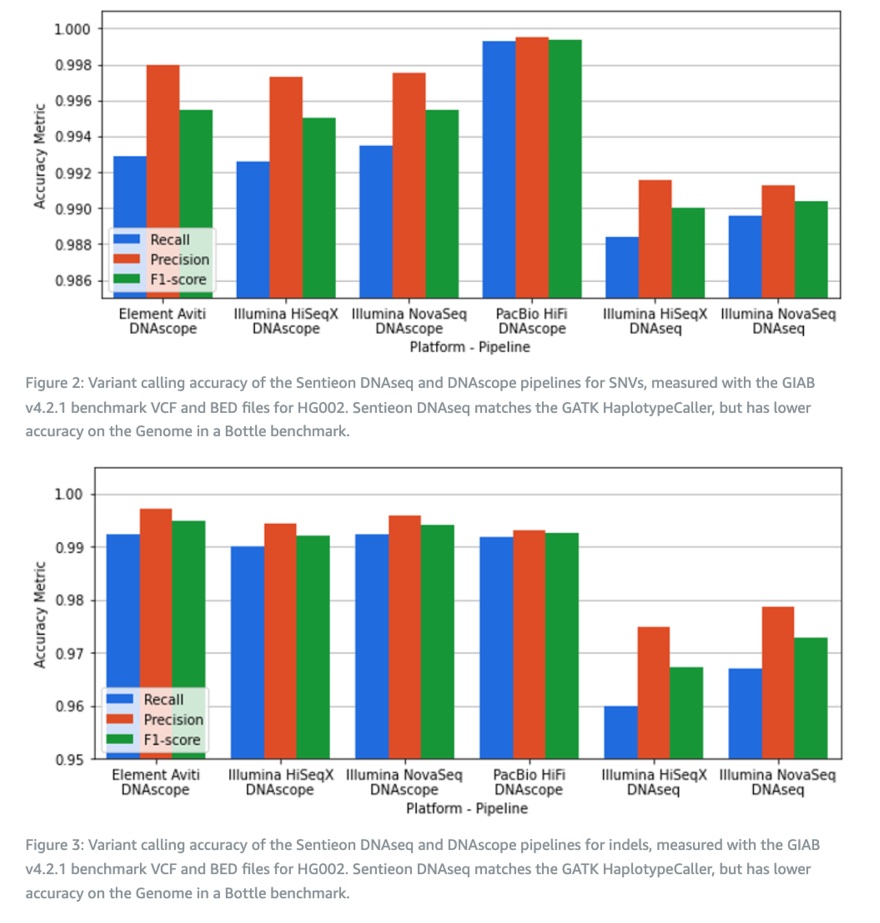
- Sentieon DNAscope balances clinical-grade accuracy with practical performance: By combining machine-learning–based variant calling, deterministic results, and PrecisionFDA-validated consistency, DNAscope delivers accuracy better than DeepVariant in benchmarked evaluations while running efficiently on standard CPU infrastructure.
- Software optimization can rival hardware acceleration for high-throughput labs: With accelerated alignment (BWA-MEM compatible), fast short- and structural-variant calling, and seamless CLI full-pipeline integration, Sentieon offers runtime comparable to FPGA- and GPU-based solutions for many production-scale WGS workloads, while maintaining flexibility, predictable costs, and easier adoption.
The Standard Bottleneck: Why Labs are Moving Beyond GATK Best Practices
For many years, GATK has been the reference framework for variant calling in genomics.
It is well documented, widely validated, and deeply embedded in research and clinical workflows. The GATK Best Practices pipeline has helped establish consistency across laboratories and has played a major role in advancing secondary analysis standards.
As sequencing capacity has grown, however, many labs are finding that what once worked well at smaller scales becomes harder to sustain in high-throughput environments.
When processing large volumes of whole genome sequencing (WGS) or whole exome sequencing (WES) data, GATK pipelines can introduce operational friction:
- Long turnaround times per sample
- High CPU and memory usage
- Limited parallel efficiency in some pipeline stages
- Increased infrastructure and cloud computing costs
For example, running a standard 30× WGS sample through a traditional GATK-based variant calling pipeline can take up one to two days on conventional CPU infrastructure. At the population scale or in clinical settings with tight reporting timelines, this latency can affect throughput, cost control, and service levels.
Importantly, this shift is not about questioning GATK’s scientific foundation. Many labs still trust GATK for accuracy. The challenge is practical: how to maintain that level of confidence while meeting modern expectations for speed, consistency, and scalability.
This is where newer alternatives, designed specifically for production-scale genomics, are gaining attention.
Sentieon DNAscope: Clinical-Grade Accuracy on Standard CPU Infrastructure
Sentieon DNAscope was developed to address the performance limitations of traditional pipelines while preserving the rigor expected in clinical and regulated environments.
Rather than layering optimizations on top of existing tools, Sentieon rebuilt key algorithms with a focus on computational efficiency and reproducibility. DNAscope incorporates machine-learning–based variant calling, enabling it to achieve higher accuracy than DeepVariant without relying on GPU acceleration.
Several characteristics distinguish DNAscope in practice:
- Proven performance in PrecisionFDA challenges, including accuracy benchmarks and the Consistency Challenge for variant calling.
- Deterministic results, meaning repeated runs on the same data produce identical outputs
- Compatibility with existing GATK workflows and formats
- Deployment on standard x86 and ARM CPUs is commonly used in labs today
The PrecisionFDA Consistency Challenge is particularly relevant for clinical users. Consistency across runs is essential for compliance, validation, and long-term confidence in results. DNAscope’s ability to deliver stable outputs across repeated analyses addresses a common concern with pipelines that rely on stochastic processes or downsampling.
From a variant quality perspective, in benchmarked datasets, DNAscope’s ML models help reduce false positives in complex genomic regions such as:
- Low-complexity sequences
- Homopolymer stretches
- Segmental duplications
These regions often account for a significant portion of downstream manual review. Improving signal quality upstream can reduce analyst workload and shorten reporting timelines.
All of this is achieved on standard CPU hardware, lowering the barrier to adoption for labs that prefer not to invest in specialized compute accelerators.
Benchmarking Speed: Sentieon Compared With Illumina Dragen and NVIDIA Parabricks
Performance comparisons are often where labs focus their evaluation, particularly when throughput and cost efficiency are top priorities.
Today, three common approaches are used to accelerate secondary analysis:
FPGA-based acceleration (Illumina Dragen)
Illumina Dragen uses FPGA hardware to deliver high-speed alignment and variant calling. In many cases, 30-35x WGS analysis can be completed in under two hours.
Trade-offs to consider include:
- High upfront hardware costs
- Vendor-specific infrastructure
- Less flexibility outside the Dragen ecosystem
GPU-based acceleration (NVIDIA Parabricks)
Parabricks leverages GPUs to accelerate alignment and variant calling, often achieving performance comparable to FPGA systems.
Key considerations include:
- Dependence on high-end GPUs
- Higher infrastructure and operational costs
- Additional complexity in managing GPU workloads
CPU-optimized acceleration (Sentieon DNAscope)
Sentieon takes a different approach by focusing on software optimization rather than specialized hardware.
Across independent benchmarks and real-world deployments, Sentieon commonly demonstrates:
- Alignment speeds up to ~3-5× faster than standard BWA-MEM implementations
- Variant calling speeds that are often observed to be ~10–20× faster than traditional GATK-based pipelines in benchmarked workflows
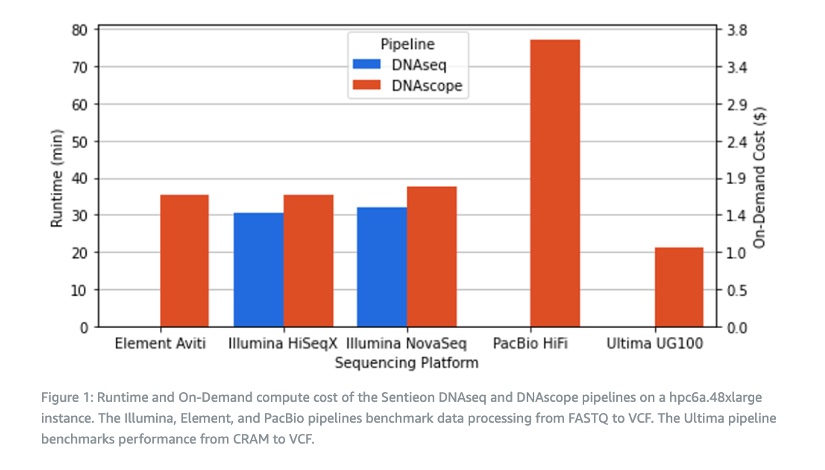
- End-to-end WGS runtimes comparable to Dragen and Parabricks
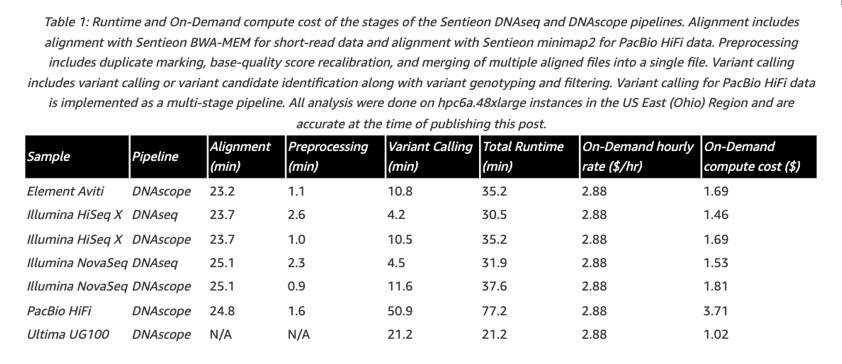
In practice, a 30× WGS sample can often be processed in around one hour on a modern 64-core CPU server, depending on the pipeline configuration.
For many labs, this shifts the cost equation. Instead of investing in dedicated FPGA or GPU systems, teams can:
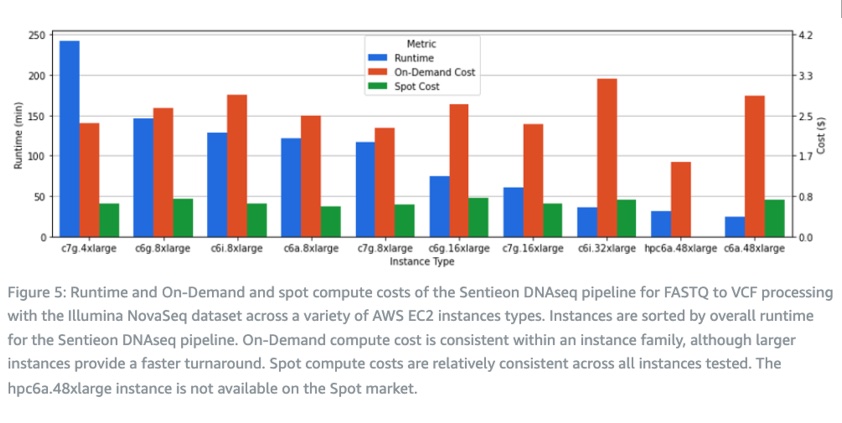
- Reuse existing CPU infrastructure
- Scale horizontally with predictable costs
- Avoid hardware-specific lock-in
From a return-on-investment perspective, Sentieon allows performance optimization through software, which is often easier to budget and scale than specialized hardware deployments.
From BWA-MEM to Accelerated Mapping: Improving Efficiency at the Front End
Alignment remains one of the most resource-intensive steps in any sequencing workflow. BWA-MEM has long been the standard aligner due to its balance of speed and accuracy, and it remains widely trusted across the industry.
However, BWA-MEM was developed when sequencing throughput and core counts were much lower than they are today.
Sentieon addresses this by offering an accelerated implementation of BWA-MEM that preserves algorithmic behavior while improving execution efficiency.
Key points of trust for labs:
- Output is algorithmically equivalent to standard BWA-MEM
- No changes to seeding, scoring, or alignment logic
- Compatible with existing downstream tools and validations
Performance gains come from implementation-level improvements, including:
- Better multi-threading across high-core CPUs
- More efficient memory access patterns
- Reduced I/O overhead
In real workflows, this often results in 3–5× faster alignment, depending on the hardware configuration. For labs processing dozens or hundreds of genomes per week, faster alignment significantly shortens overall pipeline runtime and improves resource utilization.
Because outputs remain consistent with BWA-MEM, adoption does not require re-establishing scientific trust in a new aligner—an important factor for regulated or clinically validated pipelines.
Seamless Integration: Command-Line Compatibility With CLI Interface
Operational friction is a common barrier when evaluating new tools. Many labs have invested heavily in workflow automation, monitoring, and staff training around existing pipelines.
Sentieon reduces this friction by supporting GATK-style syntax and offering a Dragen-like command-line interface for common workflows:
- GATK-style syntax
- CLI Interface
For teams currently using Dragen, this compatibility enables a smoother transition:
- Many existing scripts require only minimal changes
- Output formats remain consistent for downstream analysis
- QC and logging workflows can be preserved
For labs migrating from GATK, Sentieon accepts familiar parameters and integrates cleanly with workflow managers such as Nextflow, Snakemake, and WDL.
The result is faster evaluation and adoption, with lower engineering overhead. Teams can focus on performance and accuracy outcomes rather than re-engineering their pipelines.
Top GATK Alternatives for Production-Scale Genomics (2026 Comparison)
| Feature | Sentieon DNAscope | GATK | Dragen | Parabricks |
| Accuracy | PrecisionFDA-validated, Best in industry | Widely trusted standard | High, proprietary | High, DeepVariant-based |
| Speed (30× WGS) | ~1 hour on CPU | 24–48 hours | ~90 minutes | ~2 hours |
| Hardware Requirements | Standard CPUs | Standard CPUs | FPGA servers | GPU servers |
| Infrastructure Cost | Moderate | Low | High | High |
| Ease of Integration | GATK & Dragen compatible | Familiar ecosystem | Vendor-specific | GPU expertise required |
| Scalability | Linear CPU scaling | Limited by runtime | Hardware-bound | GPU availability |
| Clinical Readiness | Strong adoption in regulated labs | Broad clinical history | Common in Illumina labs | Growing adoption, dependent on validation context |
How labs typically decide:
- Sentieon is often chosen by labs seeking a balance of accuracy, speed, and infrastructure flexibility.
- GATK remains useful in research environments that prioritize open-source tools and established standards.
- Dragen appeals to Illumina-centric labs with dedicated hardware budgets.
- Parabricks fits organizations already operating GPU-heavy compute environments.
References
https://fabricgenomics.com/resource/secondary-analysis-fast-alignment-and-variant-calling/
https://www.scispot.com/blog/top-cgm-labdaq-alternatives-and-competitors?utm_campaign=xyz123